Tuesday, February 1, 2011

One of the great Post, or several smaller?

questions and answersThis message is part of the Friday Q&A. If you want to ask, just send it via the contact form.


An Infinity asks:


There are two ways to write an article, in particular with respect to the subject matter approach – one is to write a long article covers all sub topics to one page. The second is a shorter article, write to each part-related and publish them on different days. What do you think is better?


First, your hands.


In fact, this is the problem I face one of my sites recently. New editor for the multilateralization of positions resulting from the contents of the hired and he asked me if it would be a nice long messages using smaller and publish them in "part 1, part 2, 5? or 5?.", "part 3, 5?, and so on. My answer was that you publish the post units were preferred for long.


Why this is?


Because one of the great post will bring much more traffic than the two or three smaller, in both the short and long term.


When you publish a long post, which covers all the nuances of a topic, you basically someone's problem, one-stop shop for complete solution. As a consequence, the people reading that post is much more likely to share on social media (e.g., Twitter, Facebook, Digg), this increases the traffic in the short term.


Bloggers and the future that long and structured log size may also be more likely to link to the Webmasters, by adding the associated keywords in the search rankings. In the long term because of the constant traffic from Google and post to other search engines.


Breaking a post down into smaller parts and publishing it to the order, are some of the benefits too. For example, it is a good way to create loyalty among readers as they develop the habit of visiting the site more frequently. The maximum number of times, however, the benefits of a post is published, the weight of the who request them.


Finally, remember that you can do both things. For example, suppose you have one post to the top of the list of 20 websites by learning to play guitar online ". To begin the series, and write one small post with an individual Web site every week, and when a post is published in all the 20 large one with a summary of the series and also all the twentieth to publish. By using this technology makes a great post to lose some of the buzz (like most readers will have seen the contents already), but it is a good compromise to get the best of two approaches.


Your Thoughts?

Read more...

Do you think selling is easy? Think Again!

A couple of months ago, someone approached me to See if I was interested in becoming a partner of his "make money Blogging" eBook. In her email she explained that she had great plans for the eBook. The price is $ 29, and he waited to sell 10,000 copies in the first six months.


The numbers got me curious, so I went to visit his blog. According to his "Advertise" at the bottom of the page, he or she received 50,000 monthly visitors and had 2,000 RSS subscribers.


Hhmmm, I thought.


He wanted the rain parade, so his saying was reserved for the some of the siivosti project and don't have the time to join the affiliate, (which was true), such as the desire of happiness eBook Launch still email answered.


What I had in mind was something else, that is: been in any way upon the Earth, he could sell that eBook 6 years, not to mention the 6 months to 10 000 copies!


How come? Firstly, because of the novelty of the product does, rather than revolutionary, and it is a saturated market. Secondly, the creator of the product has a strong reputation and name/place ready for the public at large to buy him.


In fact, if you had to guess I would say he has sold more than 100 pieces.


Probably this was the first time, the guy was tries to sell a product, and why he too has been assessed and evaluated in accordance with the outrageous high numbers.


I've been there myself. When my first eBook launched I had already blog 20,000 subscribers. EBook on the topic of a lot of work was to make your stay a pleasant one, and I was so I figured that at least 10% of the readers to buy it (i.e. 2000 people). Boy I was wrong!


30 days or after I had sold only 200 copies. I was really frustrated, but the whole experience taught me a good lesson: sales has never been easy, whatever.


Speaking in practice, this means that the aim should be a great product, great marketing and, as the case may be, the public at large with a place, which is eager to buy before you start selling. And even if you manage to get all these 3 factors, remember that it is difficult to obtain, people still buy.


Again, sales has never been easy. If it was, everybody would be rich!

Read more...

Five ways to network your way to Blogging success

This is a guest post by Steve Roy. If you want to Guest post on this blog, please refer to the instructions here.

The network has become the buzzword in recent years, and the social media explosion has become a "way" to build a business.

We all know social media and it can play in your success as a blogger to drive maximum power. Are still many, many blogggers, which are to take advantage of this phenomenon.

When I say I use it, don't post weekend activities on Facebook, or you have Thoughts away from tweeting throughout the day.

What I am talking about using social media to build relationships with your peers and with those who are in the social circles that you want to be part of the

The network is particularly important for the new blogger. If you think you can go alone and at the same level of success, by all means try it. However, if you want to speed up the building traffic and gaining new readers and subscribers, then you need to take advantage of the other bloggers to audiences. This is when the network becomes.

Great content is the starting point for a successful blog, but you can only begin when no one is going to be read, because you do not have traffic. Building a substantial traffic takes time, and as part of the blogging process, but why not helping yourself and the networking of bloggers who have already achieved what you want to start?

For example, I am a fitness centre with State-of-the-blog, which has been running since 2008. It is never received more than 300 visitors a month. Why? Because I'm not a network one bit. I have written in my posts and done anything to get people to read them.

Now make the current blog, my attention is focused on building relationships through networking and has been a much greater success. Here are some of the things I have done that have helped grow pretty quickly on my blog:

1. Use a guest posting.

We've all heard that Guest posting is a great way to build traffic and reach out to more readers. A few important things to keep in mind when using this method are:

Search the blog the same niche.I see bloggers who wish to submit their record of high traffic Web site, even if it is a completely different niche. The great mistake. Although some of the traffic, you can get it, the possibilities are that they are of negligible interest with respect to the interest in the topic you want. Does not make sense to driving traffic to your blog, if anyone wants to read or newsletter.Interact with those who Guest-post a comment. Don't just answer "thank you for your comment about", ask questions and get them talking to each other, which is how they get to come to my blog and readers now, too.

2. the Use of Twitter.

Months I was resistant to Twitter because I thought it was a glorified chat room. When I was finally convinced to get on board for a friend, I got its potential. , I think Twitter is the most effective of all the social media waste streams. Just last month I have "A" list of bloggers in contact with and received their radar, formed a very successful business owners and bloggers relations and made several friends in the process. When used correctly, Twitter can be an incredibly strong and may affect a huge business.

3. be useful.

Anyone actually promote and send a link to the my stuff link after the promotion, but massive traffic, real opportunities for other starting to do it for you. (I) 20 tweets to send data to your Latest message and get a few visitors.

One tweet from the person, such as Pat Flynn, Brian Clark, Yaro Starak, or to send 50 or 100 times the traffic, which could contribute to myself. How do you get these big names to promote you? You will need their attention. Email them something that they are interesting, to sell an affiliate, please send them to the personal and individual Tweet, but is not the value you provide.

Successful bloggers are incredibly busy people and inundated e-mails, phone calls, and everything else all day every day. Need to stand out, is different, and be looking for a handout. "In this case, the" Please RT "does not work with these seriously.

4. Friends.

I have been fortunate to meet a few people on Twitter who I now call friends. It happens only in such a way as to ensure that these friends, blogs, which are much better than mine.

My aim is to build these friendships and hopefully learn a few things about blogging along the way. If you have a hidden agenda, and just use the "friendship" is the only benefit, it does not take too long and you have a very important bridge.

If we ask in order to promote the number, it will probably ruin us. If Microsoft provides a good resource for people, and our content is high quality, we are, however, be noted that we can get promoted without even. Only high-profile bloggers blog mentioned sends hundreds or thousands of visitors to our sites. The most important thing here is to focus on building a network of friends, not the applicants.

5. Give then receive.

If the philosophy that you may need to provide before the reception, you can give much better in the long term.

If you can consistently to promote high-quality network of sites and resources, you will find valuable, as well as the confidence to begin to create credibility. These two things are strictly critical building a successful blog.

People love to share information. It is our job to distribute high-quality and valuable information. If you find a new blogger, who has great ideas, by all means, send a tweet to show. If you come across a fascinating article, share, too.

Do not worry about other promotion right now, that is the time (assuming that you have good content). Your focus should provide useful resources and provides information on the network. Over time, and a little luck you may get people that can contribute to the blogs of attention. It is great can happen.

If you are building a network of some on a daily basis capacity, limiting the growth of the blog is seriously. Make a commitment to making connections with your own and begin to build a niche compared to the beneficial relationships today!

You are surprised, it can make a difference.

About the Author: Steve Roy owns EndingTheGrind.com, dedicated to their miserable jobs that you create an online business, and live with passion blog!


Log on daily blog tips newsletter and you'll need to download for free (worth $ 47) in the "make money Blogging" eBook. "you receive the tips to improve your blog in order to make money, strategies, and useful resources from around the web.

View the original article here

Read more...

Do not paralyzed Media consumption in 2011

"Mahuhuli is a producer, and consumers."

At the end of last year, a friend shared this resolution on Facebook. It caught my attention, high resolution, which I think every blogger would do well to entrepreneurship must be considered.

I write this post, it has 23 59. 49 PM Monday morning.

This morning I returned to my computer after a weekend off of jumping into some solid blogging. I had to start at an early stage (8. morning clock) and whip out at least five posts this morning and start working on the report that I've been planning to write in the afternoon.

It was the plan, anyway …

The reality is that I have been quite annoying. It started (should never go to Tweet deck that in the early part of the day!) the link, that my friend in Twitter sent me to read. The link led me to another and another.

This morning I must have read 20 blog posts and articles, scanned at 100 or so feeds in my feed reader, watched the ten videos, spent a good hour scanning my Twitter, LinkedIn and Facebook feeds, and spent another 30 or so minutes in the forums, testing the new plugin, and … well, you get the picture.

All I did was related to blogging and business. It was all very interesting. Some had even helpful and gave me I may have had other ideas.

However, until now, you are not actually produced anything at all today. This morning has been consumption rather than production.

Don't Get me wrong — situations when you need to consume.

We all know that our bodies do not function properly if we are not eating well. Cars don't run well without petrol consumption. Consumption is necessary.

We all need to consume to withstand the physical sense. In the same way as bloggers we need time, when we participate in the other ideas and declare what others are saying — the time when we have the evaporative emission trends and information in our industry.

There are also times when we need only work to shut down and consume something fun and mindless can be a good for us too (for all the Angry birds?).

However, many people live in consumption mode, if they do not produce anything.

The number of times I've I've chatted to bloggers, who have the following issues:

does not have enough time to post on, but plenty of time for the fun of the Internet aimlessly too toimintarajoitteinen, whether or not they are angry birds, Farmville, Twitter, Youtube or something else feeling you need to read all of the other niche blog for fear of missing an important development.

I suspect the "consumption" approaches is one of the reasons that many of us get a at the end of the year and are wondering why we did not reach any grand plans that we had.

For example, to return to assume our bodies. We consume food, the main reason is to get energy — to take action. We eat, so we've fueled.

With the monitoring of foodstuffs intended for human consumption does not present a danger arises when all we do is eat and eat, and we don't actually burn off energy, gives us the food. Consumption without some kind of action out of what we consume disk lead to obesity. And my experience is that the same advice applies to the online store.

There is nothing wrong with consumption, on the Web has to offer, but consuming your own activities energize approach and production, and you will be a lot healthier than if you simply enjoy it for the sake of clarity.

As we add new year, I wonder if perhaps we need to do something together, you can get in touch with the concrete path to production for the year 2011.

I don't want to get to the end of this year and look back to the year one, if you read the articles a lot, play games, read a lot and make a lot of Tweets, and …

I want to get to the end of 2011, and be proud of the fact that I am:

created by Belgium rather than watching others do a better job of themselvesadded discussions on myself and other talkmade othersinspired region in the world a better place, one way or another.

Solving a problem is a producer, not a consumer, in 2011. What about you?


Read more...

"If you want to" and "want to buy the" differences between the

This guest post is by Ryan Barton of The Smart Marketing Blog.


As I was sitting at a café over breakfast, the couple nearby flipped through their Sunday paper. As I tend to do, I eavesdropped on their conversation.


“Will you look at that bedding? That’s wonderful!” “Oh my God, I’d die for those shoes.” “I love that movie, and it’s on sale!”


Aside from my habitual eavesdropping problem, the conversation’s simplification of the “want” impulse is vital to your online success.


There’s a significant, actionable difference between admiration and buying intent.


The first is an attraction, a respect, a good feeling. “That car has beautiful lines.” “Wow, a front-facing camera and it supports Flash?” But regardless of all those positive thoughts, admiration lacks a fulfilled need.


The second says, “not only do I admire this service or product, but it’s exactly what I’m looking for.” “My New Year’s resolution was to focus on marketing, so this is perfect!” The product satisfies a real need—not a flighty want.


Earlier this year, Lemon and Raspberry subscribers said they’d absolutely love to win my ebook, Smart Marketing, during Amy‘s New Year’s blog party.


“Ooooh I’d LOVE to win this! I’m always up for some good marketing insight!!,” said one reader. Another agreed, “I would love to read this book. Maybe I can count it as one of the many books I resolve to read this year.”


That’s flattering; really, lots of kind words. Yet, after the contest ended and the book was awarded, some readers suddenly didn’t want the book; or, more accurately, they didn’t want to pay for it.


This is the “want” gap in action—the difference between liking a product and actually wanting to pay for it.


Amy’s readers may have liked the idea of reading my book, but they didn’t realize a present need for it. It’s a great idea, and it’d be a nice addition to a library, but there wasn’t enough of an internal need to get them to pull out their wallets.


We see the same principle, but to a greater extent, with larger giveaways. Sure, I’ll take the car, the free cruise, the year’s supply of coffee—but I’m not going to pay for it.

Image by Austin Kleon


Friend and artist John T. Unger experienced something similar with a book of poetry he wrote; the “want” gap was later brilliantly illustrated by Austin Kleon.


John’s poems had a real, emotional impact on a reader; the reader admired the author. Yet all the admiration in the world couldn’t compete with the prospect’s lack of buying intent.


Businesses tend to forecast and allocate advertising monies based on consumer feedback, which is unfortunately more “do you like?” than “will you buy?”


That’s what focus groups have become, haven’t they?


“Do you like this new and improved artisan sandwich? How ‘bout this car? Pretty isn’t it? Would you go on vacation with this airline?”


None of those questions ask, “would you buy?” And that’s the question that makes or breaks most launches.


Understanding this gap and how you can bridge it is your way to converting admiring prospects into paying, satisfied, and loyal customers.


What you may not realize is that admiration is a big step forward in closing the sale. The prospect has already indicated they appreciate you and your product, but they don’t think they need it. That doesn’t mean you’re out of luck; you can fix this.


Here are five steps I use to effectively bridge the gap between admiration and convincing a prospect to buy.


Chances are, before reading this article, you’d never heard my name. If you’re launching a product of your own, you may face the same challenge—obscurity.


If I had released my ebook under Darren’s name instead of my own, the sales would’ve been drastically different than my initial figures. Darren’s an established figure in the industry. Over 167,000 subscribers and 19,000 Facebook fans are testament to this. His community buys into his history of success. My own success isn’t global like Darren’s, but that doesn’t mean it’s not as relevant.


That’s why the endorsement of Hall of Fame speaker and bestselling author, Scott McKain, was so powerful. Scott had a lot ofkind words about my book—and his review told new prospects my book wasn’t a scam, it was real and unique, and they needed it.


That’s the power of word-of-mouth marketing. But it’s leveraging these words that helps you confirm legitimacy and close the sale.


It’s pompous to assume that because you have a product, it’ll be bought. Give prospects a reason to buy. What’s in it for them? Show them value and security in their purchase.


For my own book campaign, my value offering included free quarterly updates. Every quarter, I send my customers an updated digital file that highlights new industry trends and developments. This makes my ebook a living book—it doesn’t gather digital dust, it’s a constant resource.


Plus, it maintains my personal brand awareness among my clientele in a most personal manner.


I also went so far as to include a 100% results-and-satisfaction guarantee with every purchase. Yes, I’m that confident in my content. It works, so why wouldn’t I offer a guarantee?


And as for the prospect, why wouldn’t they buy? There’s absolutely zero risk in making the purchase. If they were apprehensive or worried they’d get burnt, this guarantee eliminates those fears. What’s more, I’ve never had a request for a refund—it’s a guarantee I’ve never been called on.


What type of value-added element can you include in your launch that convinces your prospect that they can’t afford to not buy from you? Can you offer a limited-time price reduction to create a sense of urgency? Or a creative incentive to reward multiple purchases?


You launched your product for a reason: you recognized a demand, a need. So don’t be ashamed to tell your audience that you know it. Speak directly to them.


In my case, that meant telling small business owners and first-time entrepreneurs that I understand the daunting challenge they face in marketing themselves. What’s an effective strategy? What offers the greatest ROI? I know the thought of their business failing keeps them up at night. Moreover, I understand that heavy feeling—I’ve been there. And it’s difficult to navigate through new business decisions.


But simply telling prospects you understand their need isn’t enough. You also need to satisfy it. Which brings us to your solution. In my case, I hold the marketing road map to their success.


For my small business owner audience, it wasn’t enough to say, “Don’t worry about your business failing, I wrote a book on marketing.”


I needed to take a step back and detail the topics I’d covered—targeted marketing, brand differentiation, social media ethics, blogging, and so on—and explain how each topic plays into their success.


Andy Nulman uses the analogy of “virgin contact lenses” as a great way to remove yourself from something you’re deep into, to gain valuable perspective. You, yourself, are in-the-know. You understand what you offer, since you’re the product creator. But for the first-time prospect, you need to say exactly what you do. Assume nothing on their part. Look at your product the way a first-time prospect would, taking nothing for granted.


You’ve highlighted their need, and you’ve detailed exactly what you’re providing. Now, explicitly tell your prospects with confidence, “I am the solution. My product will fix your problem.”


You’re at the mall; you’re hungry. You walk towards the food court, and as you get closer, you begin to smell the variety of foods. “What do I want? What am I in the mood for?” you ask yourself.


And as you arrive at the food court entrance, before you stand 15 different restaurant choices, people with trays of food rushing to and from tables. Your gaze moves across the large room, scanning the signs and lines of each of the restaurant choices. Asian food? Not bad. Pizza place: ghost town. Sandwiches … not really in the mood. But the burger joint is hoppin’.


Without saying a word, every person in each line is telling you their preference—the majority favored the burger over the pizza. And that makes you wonder, what is it about the burger that everybody loves so much? You don’t want to miss out on what the people in the burger line are enjoying. Now, your decision is made: burger it is.


In the digital food court, it’s similar; it’s the online equivalent of, “I’ll have what she’s having.”


Show prospects how much your customer base supports you. Show them you’re popular, show them what other customers are buying and how they’re benefiting from it, and force the inactive community to buy in and be part of the “next big thing.”


The hype, the tangible energy in your community, your popularity—they’re all extremely powerful selling tools.


Your blog, your business, your campaign, your new product—should be less about what you think people want, and more about what your prospects will actually act on. Want to be profitable? Then that’s your focus: what people want.


Save yourself time and money. Understanding this “want” gap and bridging it—conquering it—improves your conversion rate, it motivates you through your new-found success, and it takes your efforts to a competing level.


How have you experienced the “want” gap in your blogging efforts? And how have you bridged it?


Ryan Barton is the author of the “Smart Marketing” eBook and he writes at The Smart Marketing Blog for Small Business Success; you can follow him on Twitter, where he shares entirely too much information. He wrote “Smart Marketing” with the intent that small businesses would glean insightful information and tangible marketing strategies so they too, could compete competitively with industry giants.

Read more...

Monday, January 31, 2011

5 Favourite, but often ignored, Analytics features

It's a wonderful thing online, is that our work is just so measurable.


In almost every industry, a lot of decisions are based on sample data or assumptions, or just the feel of gut. But online, we can measure almost all the 95% + of our visitors — yay us!


Pretty charts and statistics in the world, we have a stack to ensure that we got the numbers of the eyes. But I will bang buck (i.e., the value is maksuvaatimuksensa) is not really does not equal, I think, Google Analytics — and it just keeps getting better.


I am sure that you have a lot of is already familiar with Analytics for Google-able — and if you like, use of drugs on a daily basis. So I thought to share five Favorites, but often overlooked features in Google Analytics.


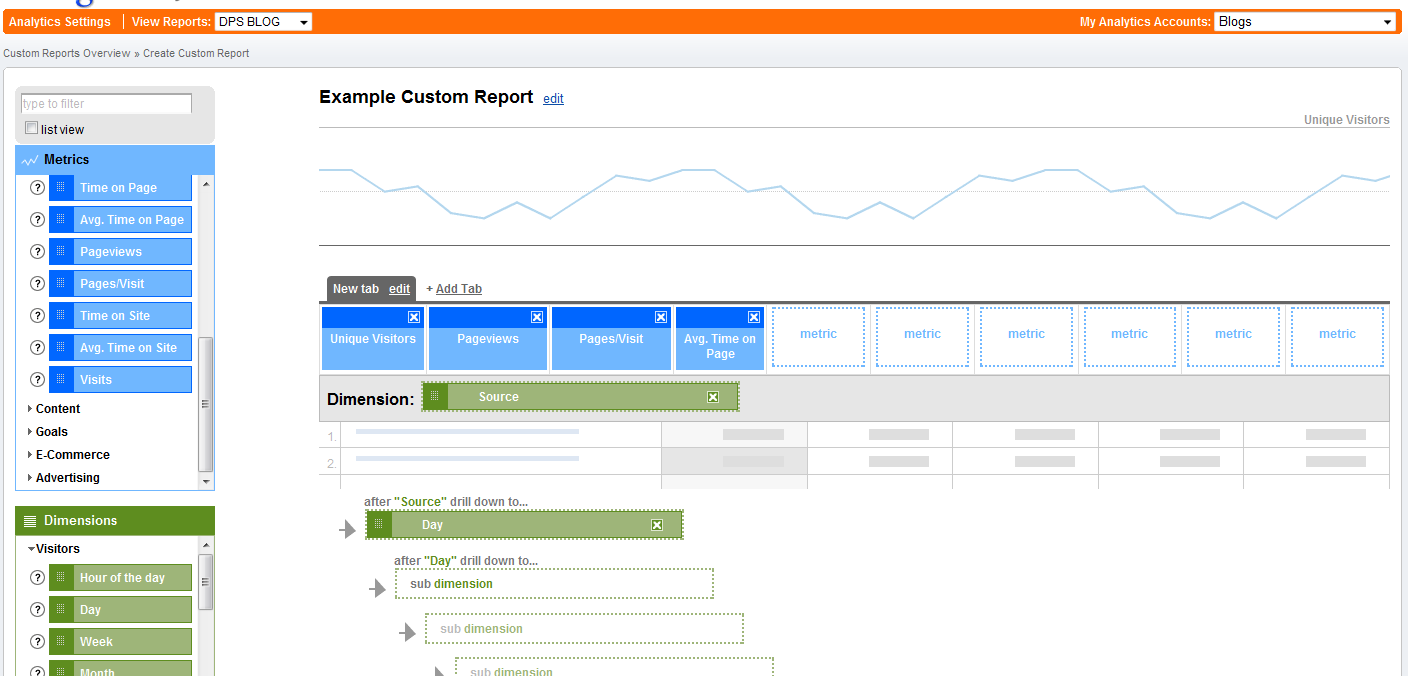
There are so many layers, layers and the measures taken by the Google Analytics interface, which I often waste time trying to find my first stop system: reports.


Custom reports, changed that. This feature is not only possible to a myriad of different perspectives, and information, but you can also save the head of each report and back, it's a moment notice. this video is a good starting point for understanding to make the most of the custom reports ".


Actually tunnustella Analytics, make sure that you have everything you need to jump a whole can be difficult. Scheduled reports make the job easier.


You will probably have to look at more than the other reports. If you select a report to the top of the page to the right a little Email icon, you can specify a timetable so that the report shall be forwarded to you via your Inbox.


This is an excellent way to ensure that the busy schedule does not work, you know what happens by way of derogation from the site.


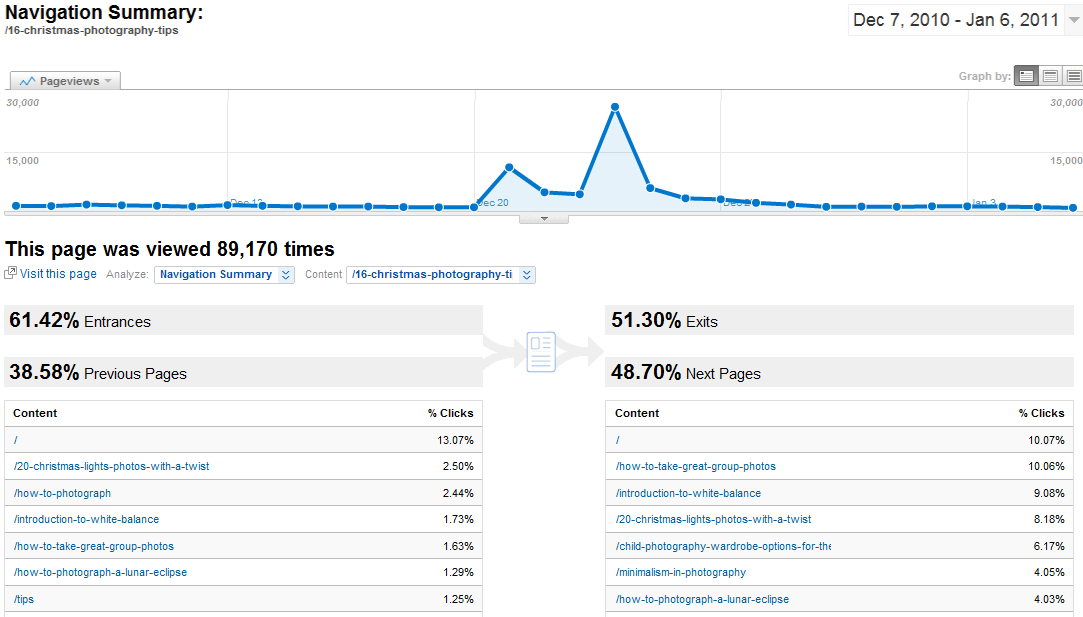
In December, I the concept of sales channels, and wrote a and a lot of you have asked how on earth you can manage to measure all of these steps. Well, part of a navigational watch at the beginning of the summary report below.


It covers the essential information for each page view, where the user came from (from another page, the external sites), and then wherever they went (Stop, the second page) — and everything in between. This is the key to the report, start browsing behaviors critical pages. You can use the summary of the contents through a part of a navigational watch. I have a habit of content Drilldown report allows you to find specific pages, and then select the I am after certain Navigational summary metrics.


When e-commerce to track Google Analytics, you can open a whole new world of insight. It is a feature that is only useful for sale online, but scarily accurate and amazingly Division.

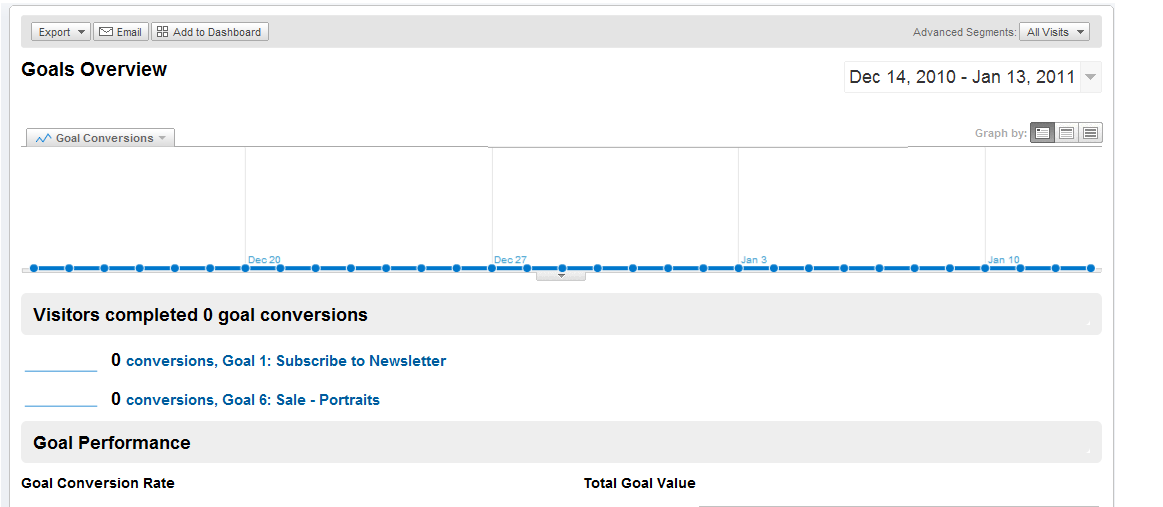
An overview of the objectives of the

Set up not only to electronic commerce may, from time to time to see the products they're selling you the reports, and how much money can you earn, but you can also begin to track them back to the other pages of the site. You may notice that the type of page view, create a blog post to Add revenue — and clearly, if the $ index.


With this metric, or collection of pages, each page you visit, the average income per site. Unfortunately, This setting is not straightforward, and you may need a little help. Not good article on the Analytics blog, which helps you transfer. Unfortunately, I can show a good screen-shot, this information was sensitive to the other — the sites usage.


Almost all of the sites are some of the desired user action. It may be to buy something else, download the sample meets, or even look at the other pages of the bunch. Google goals set allows you to keep track of these goals, such as the fox. For the overall performance of the site, but you can also track back at every stage.


Unfortunately, this feature can be a little difficult to determine, such as electronic commerce, and is something you may want to help. I will not go into too much detail on how to do this — it's all covers Analytics to your blog.


People often know of Google Analytics is a little like quick sand. When you make your first steps, it really starts to suck you in and short time later you stuck for good. More time passes, and all of a sudden your head goes — all goes dark and you do not have any idea where you are.


It is at this point, that too many people go back to the assumptions and guesswork, murmuring something from leaving "all the statistics of guff" eggheads. If you've fallen into the Analytics Quicksand, my recommendation is to find. Identifies ten key metrics that you want to measure, to create a report or a report, which shall forward them to the metrics and check them over time. When you're accustomed to, move a little bit deeper into.


The more you understand about your company, you can make better-informed decisions — and the decisions that make or break your business, not a number.


As I mentioned in my favorite Google Analytics stats package, but it would be nice to hear about stats package you are using and how you can you find them in the comments. Or perhaps you can highlight your own Googe Analytics is covered … I am your favorite Functions

Read more...

8 tips to start your own blog, successfully challenges

Earlier this year, I launched a challenge called 30 Days To Live a Better Life (30DLBL) on my blog. This is a 30-day challenge where participants complete one task a day, for 30 days in the month, that will help them live a better life. When I created 30DLBL, it was breath of fresh air—I’d not seen any such personal development challenges around at the time, and it was fun to do something different rather than just write articles every week. I was very excited about my challenge, and thought I’d probably get about 100 people joining in, or 200 people max.


I was proven wrong. The minute the post went live, there were already a handful of participants. By the end of the day, there were over 100 participants. The number slowly exploded to 200, 300, 500, 800 … to over 1,200 excited participants all over the world, all ready to transform their lives in the next 30 days! Not only that, but people were tweeting about 30DLBL, blogging about it, sharing it on Facebook, and telling all their friends about it. Some readers even specially created new blogs just to blog about their 30DLBL experience. Needless to say, the response totally blew me away!


The 30-day challenge was extremely successful, and many participants’ lives changed in unimaginable ways that month. Many of them rediscovered themselves on a whole new level, set new goals, and created new plans for their future. It was so successful that I later launched a guidebook and a workbook on the upgraded version of 30DLBL. The book sold over 200 copies in less than two weeks of launch, and last month I did a second run of the challenge, with many more runs planned in the future.


Some bloggers have also been inspired by the success of 30DLBL and are launching their own 30/31-day challenges, and it’s great to see them getting down to engage their communities.


First off, you might wonder, why run a challenge? There are four key reasons:

Create a breath of fresh air: At that time I launched the challenge, I’d already been running The Personal Excellence Blog for about 1.5 years. After 1.5 years of writing article after article, I wanted to have a 30-day challenge as a breath of fresh air, as Darren did with his challenge, 31 Days To Build a Better Blog. The challenge was designed to complement what I write at the site. It was very much welcomed by the readers.Help readers apply what you teach: Even while we may be writing down the most important insights in our articles, it’s a whole different thing altogether to apply that advice to real life. Some readers may not fully comprehend what you’re writing, while some readers may not know how to apply your insights. A challenge helps them take action.Engage readers: A challenge lets readers become involved. It makes them feel like they’re a part of your site. Launching 30DLBL helped me get up close and personal with my readers in a completely new way. At the end of the 30 days, I’d developed a very close bond with many of my readers.Form a community: With the launch of 30DLBL, I saw the first signs of a true community forming around my blog—a community where readers interact with each other, care for one another, and really help each other grow. This made me very excited about what’s ahead.

Here, I’ll share with you eight tips to help you run a successful challenge on your blog.


Some bloggers may prefer to write articles, which is totally fine. Challenges are not necessarily for everyone. Figure out whether you do want to run challenges as part of your blog, and how regularly you want to do them. It can be a once-in-a-while project—for example, Darren runs 31DBBB at Problogger about once every few years. Or it can be a regular affair, which is what I’m planning for my blog.


I love interacting with my readers, getting up close and personal with them, and growing side-by-side with them, and I see a challenge as the perfect platform for me to know them better. Last month I finished a second run of 30DLBL with great success, and it’s now part of my plan to have three 30DLBL challenges every year. On the other hand, I launched a new 21 Days To a Healthier Me challenge in January ’11, where people all around the world get together to live a healthier life for 21 days. I’m planning more new challenges in the months ahead, to get more readers to join in and participate. Through these challenges, I’ve gotten to know my readers on a much personal level than I had previously with just writing articles.


Before you kick off a challenge, you’ve to ensure that you have a sizable reader base. The last thing you want to do is to have a challenge that no one’s participating in! Bear in mind that there’ll always be dropouts throughout the challenge, so if you have 100 people signing up, you might very well end up with only ten people towards the last week, and that will pull down the momentum. So the more participants you can get starting the challenge on Day 1, the better.


When I kicked off 30DLBL, I had almost 10,000 subscribers. I believe you’re good to go if you have at least 5,000 active subscribers, though I’ve seen people launch challenges with only 500 subscribers and they went well. In those cases,  the outreach was smaller by comparison, and the community, while small, was tight-knit.


Your challenge should have a tangible, compelling benefit that draws people to participate. Since people have to dedicate time to the challenge, the benefit has to be something attractive. For 30DLBL, the benefit is about living a better life, and that’s something which was very compelling to many. After all, as growth-oriented people, we’re always looking for ways to grow and improve our lives.


Your challenge should be relevant to the topic of your site. It’s going to be quite strange if your blog’s about cooking and you run a challenge that’s on making money! Since I run a personal development blog, 30DLBL was a great complement to what I’d been writing at the blog. It was a great way to reinforce the ideas and concepts I’ve been sharing since the blog started.


Besides it being a direct complement, your benefit can be a subset of your site’s offering. Think about what your site is about, then brainstorm on the various sub categories that fall under the theme of your site. Are there any noteworthy topics worth starting a challenge on? The Live a Healthier Life in 21 Days challenge I just ran this month has been a great success. While some may think that health and personal development are unrelated, it works as healthy living is part of living a better life. People who are interested in personal development are the same people who want to pay attention to their health and fitness too.


I posted the announcement post for 30DLBL five days before it started, which provided enough lead time for people to find out about the challenge, share with their friends, and join in. At the same time, I think it would have been better if I posted it earlier. Overall, one week should be more than enough time for you to promote the challenge and spread the word.


It’s up to you to design your challenge the way you want. I recommend making it a daily challenge, since it’ll be easier to follow. Duration-wise, I recommend 30 or 31 days (where participants can dedicate a whole month to it), or 21 days if you think 30 days is too long. 30DLBL was, of course, 30 days long, whereas my healthy living challenge was 21 days long. Anything longer than one month will be too long—participants will be likely to lose steam before it finishes.


A successful challenge is one that allows the participants to interact with one another—not just to interact with you. Establish channels for them to engage with one another. With 30DLBL, I initiated a twitter hashtag of #30DLBL, so that participants can connect with one another. I also created a new forum, with a sub-forum dedicated to the challenge so readers could have their own space to interact with one another. This approach worked very well. Participants used these platforms to give each other support and encouragement, and at the end of the process, many new friendships and bonds had been formed. Many of them added each other on Facebook afterward, and stayed in touch through the forums and Facebook.


If you make your challenge tasks daily (which I recommend), you want to make them easy to follow. Don’t set tasks which take a week to complete. If your challenge is too tough, your readers may get discouraged and give up mid-way. This will defeat the whole purpose of the challenge to begin with! Make the tasks easy to process—break them up into mini-steps and spell everything out in layman’s terms.


For example, when I first ran 30DLBL, there were several tasks that made the participants feel discouraged, because they couldn’t finish them on time. Subsequently, they kept putting off the tasks and eventually disappeared off the radar. Hence, in my upgraded version of 30DLBL, I revised the tasks such that they could be completed in 30 minutes to one hour, if the person made an effort to do so.


Your participants are the backbone of your challenge, so stay in tune with their progress every step of the way. Observe what’s happening at ground level. If there’s something going awry, step in to help out. Throughout 30DLBL, my site received over a thousand comments from readers. I read through as many comments as I could and replied to all the questions that they asked. I also made a point of responding to as many participant comments as possible, so that they would be encouraged to share more. This created a tightly-knit community around my challenge.


I also noticed after four or five days in the challenge, some participants were falling behind. Hence, I introduced a three-day break after the first week, so the participants who were falling behind could catch up. It was very much welcomed and many participants were able to regroup themselves and get back into the challenge after that.


Challenges can be resource-intensive, but they definitely pay off. Your readers become more engaged, you help to make a positive difference in their lives, and you can build a community for your site. It’s up to you whether you want to create one, and what you want it to be about.


For me, running 30DLBL has been an extremely rewarding experience, and it’s not going to end there. I’ve planned a series of new challenges which I look forward to completing with my readers. Have you ever run, or considered creating, a challenge for your blog? Tell us about it in the comments.

Read more...

About This Blog

  © Free Blogger Templates Cool by Ourblogtemplates.com 2008

Back to TOP